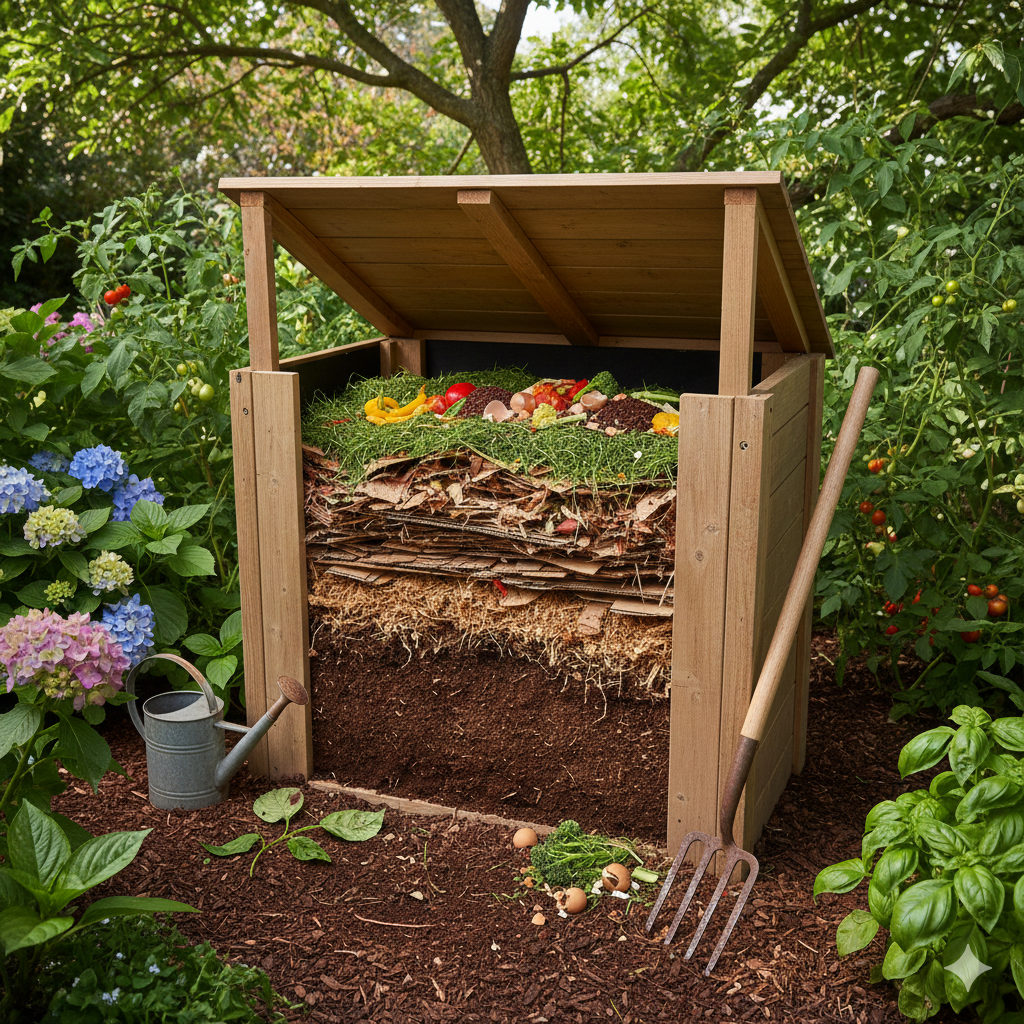
Tired of seeing your kitchen scraps go to waste? There’s a simple, powerful way to transform that waste into a valuable resource for your garden. This process is called composting, and it’s one of the most effective things you can do to live more sustainably. Composting is nature’s recycling program, breaking down organic materials into a rich, dark soil amendment that gardeners affectionately call “black gold.” It’s a rewarding practice that reduces your environmental footprint while benefiting your plants.
This guide will walk you through everything you need to know to become a confident composter. We will cover the essential science, the different methods you can use, and the perfect recipe for a successful compost pile. By the end of this article, you will have the knowledge and confidence to start your own compost pile today, turning everyday waste into a nutrient-rich treasure for your garden and reducing your contribution to the local landfill.
Table of Contents
What is Composting and Why Should You Start?
At its core, composting is the natural process of decomposition, supercharged. When organic materials like fruit peels, coffee grounds, and yard trimmings are gathered, they create an ideal environment for microorganisms. These tiny workers, including bacteria and fungi, get to work breaking everything down. They consume the organic matter, transforming it from recognizable scraps into a uniform, soil-like material called humus. This process mimics what happens on a forest floor, but in a more controlled and accelerated way.
The benefits of composting are immense, impacting both your garden and the planet. By diverting organic waste, you significantly reduce the amount of trash sent to the landfill, where it would otherwise produce methane, a potent greenhouse gas. For your garden, compost is a powerhouse. It enriches the soil with essential nutrients, eliminating the need for chemical fertilizers. It also improves soil structure, helping it retain moisture and promoting healthy root growth for stronger, more vibrant plants.
Getting Started: Choosing Your Composting Method
Before you start, it’s helpful to choose a composting method that fits your space and lifestyle. There are several options available, each with its own advantages. The most common methods are using a stationary compost bin, a compost tumbler, or starting a worm farm.
Your choice depends on how much space you have, the volume of scraps you produce, and how hands-on you want to be. A simple bin is great for a backyard, while a tumbler can speed up the process. For those in apartments or with limited outdoor space, a worm-based system offers a compact and efficient solution.
The Classic Compost Bin (Open vs. Closed)
The classic compost bin is a popular choice for those with a backyard. An open-bin system can be as simple as a pile or a structure made from wire or wood pallets. This method is easy to set up and can handle large volumes of yard waste. However, it can be slower and may attract pests if not managed properly.
A closed compost bin is a container, typically made of plastic, with a lid. These bins retain heat and moisture more effectively, which can speed up decomposition. The enclosed design also helps deter pests and keeps the pile looking tidy in your garden. They are an excellent, low-maintenance option for most suburban homes.
Tumbler Composting
Compost tumblers are sealed barrels mounted on an axle, allowing you to turn the entire pile with a crank. This design makes the essential task of aeration incredibly easy, as you don’t need a pitchfork to mix the contents. Regular turning mixes the materials and introduces oxygen, which helps the microorganisms work faster.
Because they are sealed, tumblers heat up quickly and can produce finished compost in as little as a few weeks, much faster than a static pile. They are also fully enclosed, which keeps pests out and prevents odors from escaping. This makes them a great choice for urban or suburban gardeners who want a fast, clean, and efficient composting system.
Vermicomposting (Worm Composting) for Small Spaces
Vermicomposting is a fantastic method for apartment dwellers or anyone without a yard. This system uses a special type of worm, typically red wigglers, to break down kitchen scraps in a compact bin. The worms eat the food scraps and convert them into nutrient-dense castings, which are one of the richest natural fertilizers you can find.
A worm bin is small enough to be kept indoors, on a balcony, or in a garage. It’s an incredibly efficient and odor-free system when managed correctly. Vermicomposting is perfect for processing vegetable and fruit scraps, coffee grounds, and crushed eggshells, making it an ideal solution for reducing kitchen waste in a small-scale environment.
The Perfect Recipe: Balancing Greens and Browns for Your Compost
A successful compost pile depends on a balanced diet for the microorganisms doing all the work. This balance is achieved by layering two types of materials: “greens” and “browns.” The ideal mix is often referred to as the Carbon-to-Nitrogen ratio. While it sounds technical, the concept is simple: browns provide carbon for energy, and greens provide nitrogen for protein.
A good rule of thumb is to aim for a ratio of about two to three parts brown materials to one part green materials by volume. If your pile is too wet and smelly, add more browns. If it’s too dry and not breaking down, add more greens. Getting this balance right is the key to a fast, efficient, and odor-free compost pile.
What Are “Green” Materials? (Nitrogen-rich)
“Green” materials are the nitrogen-rich components of your compost pile. These are typically fresh, moist materials that break down quickly. They provide the essential proteins and amino acids that fuel the growth and reproduction of the hardworking microorganisms.
Common green materials include fruit and vegetable scraps from your kitchen, coffee grounds and tea bags, fresh grass clippings from your lawn, and plant trimmings. Think of these as the “activators” of your compost pile; they kickstart the heating process and get the decomposition cycle moving.
What Are “Brown” Materials? (Carbon-rich)
“Brown” materials are the carbon-rich, dry, and woody components of your compost. They provide the energy source for the microorganisms and are crucial for creating structure and airflow within the pile. Without enough brown material, a compost pile can become a dense, wet, and smelly mess.
Excellent sources of brown materials include dried leaves, small twigs and wood chips, shredded cardboard, newspaper, and paper towels. These materials break down more slowly than greens and ensure your pile has the right texture for proper aeration, preventing it from becoming compacted and anaerobic.
How to Build and Maintain Your Compost Pile: A Step-by-Step Guide
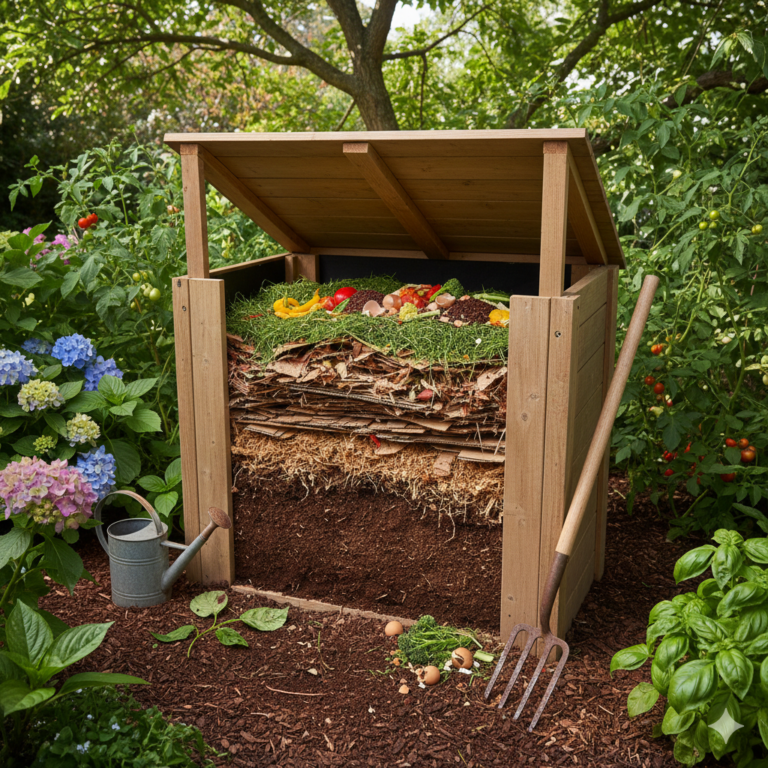
Building your compost pile is as simple as layering your materials. Start with a base layer of bulky brown materials, like twigs, to promote airflow from the bottom. Then, add alternating layers of green and brown materials, as if you were making a lasagna. This ensures the microorganisms have a balanced diet right from the start.
After layering, lightly water the pile so it has the consistency of a damp sponge—moist but not waterlogged. Proper moisture is essential for the decomposition process. Finally, finish with a top layer of brown materials to help insulate the pile and prevent odors from attracting pests.
Numbered List:
- Start with a layer of brown materials. Place a 4-6 inch layer of twigs, dried leaves, or shredded cardboard at the bottom of your compost bin. This helps with drainage and aeration.
- Add alternating layers of greens and browns. Add a layer of green materials (like kitchen scraps) on top of the browns, followed by another layer of browns. Continue this layering until your bin is full.
- Keep the pile moist. The pile should feel like a damp sponge. If it’s too dry, add water. If it’s too wet, add more brown materials to soak up the excess moisture.
- Turn the pile regularly for aeration. Use a pitchfork or compost aerator to mix the pile every week or two. This introduces oxygen, which is vital for the microorganisms and speeds up decomposition.
- How to know when it’s ready. Finished compost is dark, crumbly, and has a pleasant, earthy smell. This can take anywhere from a few months to a year, depending on your method and maintenance.
Composting FAQs: Answering Your Common Questions
Even with a good plan, questions are bound to come up as you start your composting journey. This section addresses some of the most frequently asked questions to help you troubleshoot common issues and keep your compost pile healthy and productive.
From what to avoid adding to your pile to how to deal with unwanted visitors, understanding these basics will make your experience much smoother. These tips will help you maintain a balanced ecosystem in your bin and ensure you end up with high-quality compost.
What Should You NOT Put in Your Compost (and Why)?
Do not add meat, fish, dairy products, or oily foods to your compost pile. While these materials are organic, they break down slowly, create strong odors, and are the primary culprits for attracting pests like rodents and raccoons. It’s best to keep them out of a home compost system.
You should also avoid adding diseased plants, as the pathogens can survive the composting process and spread to your garden later. Similarly, avoid pet waste (from cats or dogs) as it can contain harmful parasites. Finally, don’t add weeds that have gone to seed, as the seeds may not be destroyed and could sprout in your garden beds.
How Do I Keep Pests Away from My Compost?
The best way to keep pests away is to manage your pile correctly. First, never add meat, dairy, or oily foods. Second, always bury your kitchen scraps deep in the center of the pile, underneath a thick layer of brown materials. This makes it harder for pests to smell and access the food.
Using a closed bin or a tumbler is also highly effective at keeping pests out. If you have an open pile, ensure you maintain a good balance of greens and browns to prevent strong odors. A properly managed, hot compost pile is far less attractive to unwanted visitors.
How Long Does Composting Take?
The time it takes to produce finished compost can vary widely, from a few weeks to a year or more. The speed depends on several factors: the composting method you use, the size of the materials, the Carbon-to-Nitrogen ratio, and how often you turn the pile for aeration.
A hot, well-managed pile in a tumbler can yield compost in as little as 3-4 weeks. A more passive, cold compost pile might take a full year to break down completely. Generally, with regular turning and a good balance of materials, you can expect usable compost in about 2-4 months.
Conclusion
Composting is a simple yet profoundly impactful practice. By following the basic steps—choosing a method that suits you, balancing your green and brown materials, and maintaining the pile with water and aeration—you can successfully transform your waste into “black gold.” This nutrient-rich humus will breathe new life into your garden, helping you grow healthier plants while reducing your environmental footprint.
You now have the knowledge to start your own composting journey. Embrace the process, and you’ll soon be rewarded with a thriving garden and the satisfaction of knowing you’re making a positive difference. Ready to take the next step in your sustainable gardening adventure?
About The Author